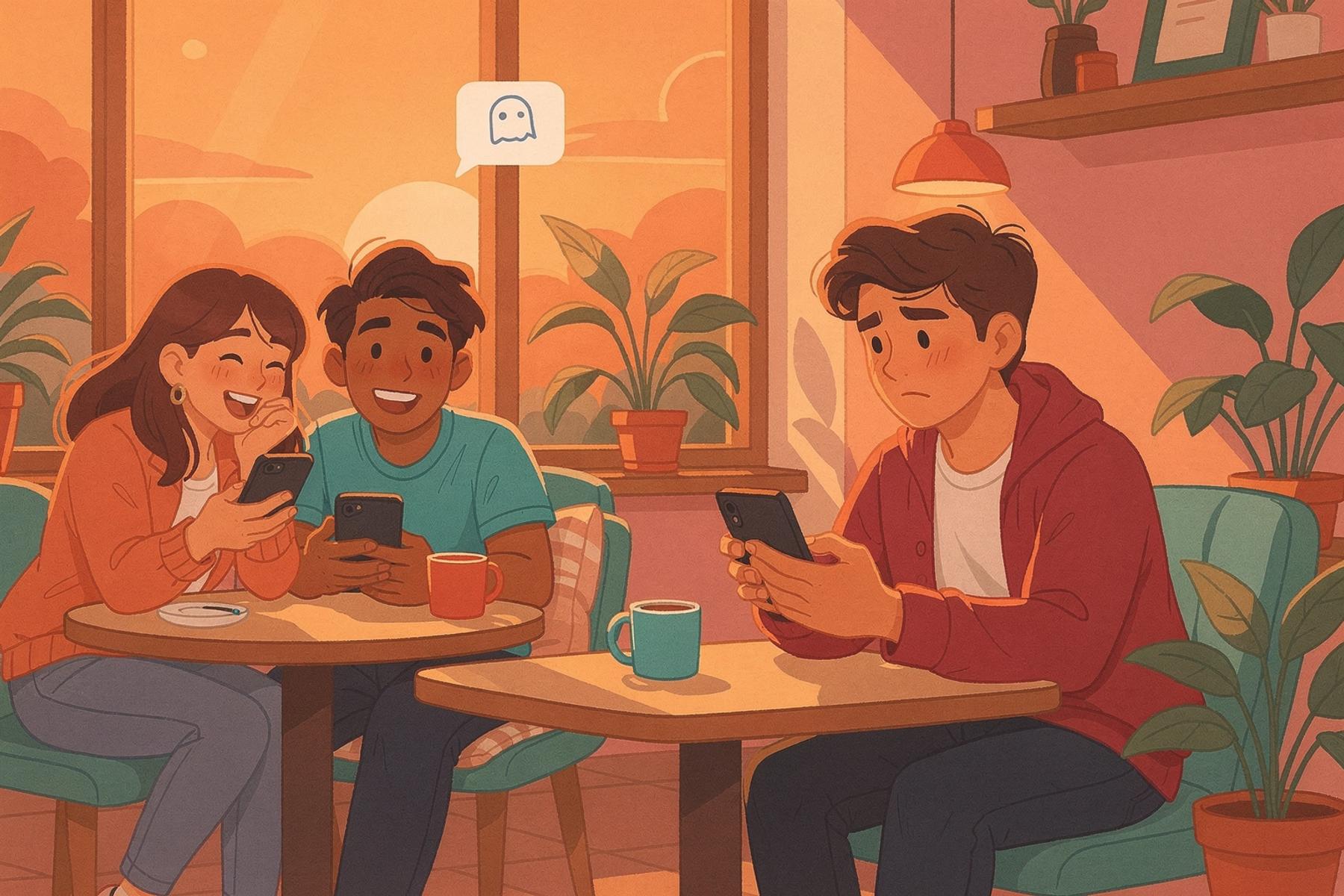
Why Ghosting Is So Common on Dating Apps
You match with someone, exchange a few messages, maybe even plan a date. Then, suddenly, silence. No reply, no explanation. You’ve been ghosted. Again.
If this sounds familiar, you’re not alone. Ghosting has become a defining feature of modern dating apps. But why does it happen so often? And is there a better way to connect with people without the uncertainty and disrespect?
The Psychology Behind Ghosting
Ghosting isn’t just rude, it’s a symptom of how dating apps have changed the way we interact. Here’s why it’s so common:
- Endless options Dating apps create the illusion of infinite choices. When someone doesn’t feel like the “perfect” match, it’s easier to disappear than to have an honest conversation.
- Low stakes Behind a screen, there’s little accountability. People don’t see the immediate impact of their actions, so they prioritize convenience over kindness.
- Fear of conflict Many users avoid difficult conversations. Ghosting feels like the path of least resistance, even if it leaves the other person confused or hurt.
- Lack of real connection When interactions start with a swipe, they often lack depth. Without shared experiences or mutual friends, there’s little incentive to treat others with respect.
Ghosting isn’t just about the person who disappears, it’s about the environment that enables it. Dating apps are designed for quick, superficial interactions, not meaningful connections.
The Real Cost of Ghosting
Ghosting might seem harmless, but it takes a toll on both the person who ghosts and the one who gets ghosted.
For the ghoster:
- Reinforces avoidance behaviors
- Misses opportunities to practice empathy and communication
- Creates a cycle of disposable relationships
For the ghosted:
- Leads to self-doubt and overanalyzing
- Erodes trust in future connections
- Makes dating feel like a game with unclear rules
The problem isn’t just ghosting itself, it’s the culture that normalizes it. When dating apps prioritize quantity over quality, respect and honesty become casualties.
Why Real-Life Interactions Lead to Better Connections
What if you could connect with people based on real-life encounters instead of curated profiles? Imagine meeting someone at a coffee shop, a coworking space, or even just crossing paths on your daily commute. There’s something powerful about recognizing a face from your everyday life.
Real-life interactions create a foundation for more authentic connections because:
- You share a context Whether it’s a neighborhood, a hobby, or a routine, shared experiences create natural conversation starters.
- There’s mutual recognition Seeing someone in person creates a sense of familiarity and trust that a profile picture can’t replicate.
- The stakes feel higher When you’ve actually seen someone, it’s harder to disappear without a second thought. There’s an unspoken accountability.
This doesn’t mean every real-life interaction will lead to a deep connection. But it does mean that the connections you make are more likely to be grounded in respect and mutual interest.
How Proximity-Based Social Apps Change the Game
Proximity-based social apps like Matuvu are built on the idea that real-life encounters should be the starting point for digital connections. Instead of swiping through endless profiles, you see people you’ve actually crossed paths with in the last 24 hours.
Here’s how this approach reduces ghosting and fosters more respectful interactions:
- Mutual opt-in Conversations only happen if both people want to connect. There’s no pressure to respond to every message.
- Minimal profiles With just one photo and no bio, there’s less room for snap judgments. Connections are based on recognition, not curated perfection.
- Real-world context When you see someone you’ve actually encountered, the interaction feels more personal and less disposable.
Matuvu isn’t about forcing outcomes. It’s about giving people the chance to follow up on real-life encounters in a simple, respectful way. Whether it leads to friendship, affinity, or collaboration, the connection starts with something real.
How to Break the Ghosting Cycle
If you’re tired of the ghosting culture on dating apps, here are some practical steps to foster more authentic connections:
- Prioritize real-life interactions Attend local events, join clubs, or simply strike up conversations with people you encounter in your daily life. These interactions create a foundation for more meaningful digital connections.
- Set expectations early If you’re not interested in someone, a simple, respectful message goes a long way. It doesn’t have to be long, just honest.
- Use tools that encourage respect Proximity-based social apps like Matuvu are designed to reduce ghosting by making interactions feel more personal and accountable.
- Practice empathy Remember that behind every profile is a real person with feelings. Treat others the way you’d want to be treated.
The Future of Social Connections
Ghosting is a symptom of a larger issue: the way we connect online has become disconnected from how we interact in real life. Dating apps have turned relationships into a numbers game, where people are disposable and kindness is optional.
But it doesn’t have to be this way. By shifting the focus back to real-life encounters, we can create a culture of connection that values respect, authenticity, and mutual interest.
Matuvu is part of this shift. It’s a tool for people who want to connect based on real-life proximity, not just profile pictures. Whether you’re new to a city, looking to expand your social circle, or simply tired of the ghosting culture, it offers a fresh approach to socializing.
Next Steps
If you’re ready to move beyond the ghosting culture and connect with people in a more authentic way, here’s what you can do:
- Reflect on your own interactions Are you treating others with the respect and honesty you’d want in return? Small changes in your behavior can make a big difference.
- Explore proximity-based social apps Download Matuvu to see people you’ve crossed paths with in the last 24 hours. It’s a simple way to reconnect with real-life encounters and let connections evolve naturally.
- Engage in real-life socializing Attend local events, join clubs, or simply be open to conversations with people you encounter in your daily life. These interactions create a foundation for more meaningful connections.
Ghosting doesn’t have to be the norm. By choosing tools and behaviors that prioritize respect and authenticity, we can create a culture of connection that values people over profiles.